Kidquips 2
August 29, 2009 | My Jottings
My granddaughter Vivienne (age 3 1/2) spent the night recently and we had a great time. We read books, sang songs, and played make-believe doggy. Depending on the day, Vivie says she is a little doggy named either Scratchy, Boney or Shorty.
She came to sit in my lap and snuggled against me. Soon she sniffed the air (she didn’t know I had put on a spritz of “Beautiful” by Estee Lauder a few minutes before), looked puzzled, and then asked me, “Grandma, why does it smell like appley-glump?”
I wonder if I should write to the Lauder Corporation.
Autumnal musings
August 28, 2009 | My Jottings
Autumn is making itself known now in our little part of the world. Even though the first day of fall isn’t officially until the end of September, when you live this far north, the earth apparently doesn’t consult the huge wall calendar I bought at Office Max to time its autumnal behaviors. The earth just does what it wants. And at the almost-47th latitude, the earth mostly wants to chill out.
The sun’s arc doesn’t reach as high as it travels across the sky now, and the light coming in the windows each day is different, more golden, than it was last week. I could stand in my kitchen, not knowing the date, and tell by the lower sunlight that summer is dying.
Here, summer usually awakens the birds around 4:30 a.m., and the cardinals, robins and chickadees are in their full Mormon Tabernacle Choir mode by 5:15 a.m., which I have always thought is one of the loveliest things in life. Now, things are pretty quiet in the mornings. Some of the birds may have already migrated south, and I’m not sure what the ones who stay for the Minnesota winter are doing. Maybe putting caulk on their windows and otherwise battening down the hatches to prepare for possibly nine months of cold.
When I got up this morning and came downstairs, I didn’t open windows and breathe in the comfortable fresh air like I did last week. I considered turning on the furnace, and then thought better of it. It is August, I reminded myself. But the house is chilly.
Michael and I took a walk yesterday and there are a few leaves beginning to turn color on the trees already. Here’s a photo taken by my good friend Bob King that was in our local paper recently.
 Many people in northern Minnesota live a pretty hectic summer. Our summers are so short, maybe people feel they must fit all the warm-weather activities they can into the three warm months out of the year. Picnics, camping, hiking, barbecues, biking, house projects, cabin trips, gardening, fishing…are all squeezed into three months of living because Minnesotans know that by late October it will be dark and cold, and for most people, life will slow down.
There are the hardy ones who go camping and ice fishing in the winter of course. And many have decided to make the best of a long cold winter by learning to ski, snow-shoe and roar through the forests on snowmobiles.
But for me, the changing of a leaf’s color on the maple in our front yard doesn’t mean snowmobiles or sitting on a frozen lake dangling a line into a small hole in the ice. For me, the arrival of autumn means removing our lightweight toile quilt from the bed and pulling out the heavy down-filled toile comforter. It means wearing sweaters instead of t-shirts, and the comfort of SmartWool socks under my Birkenstocks (Carolyn, I’m going to buy you some Birkies and thick wool socks this Christmas to complete your Drama Mom look), and it means pulling out thick and pretty scarves to keep my neck warm in the chill air.
And, the shortening of days stimulates a mostly dormant and atrophied portion of my brain called the cookothalmus that suddenly makes me want to bake loaves of crusty bread, simmer hearty soups on the stove, and stir up pans of spicy apple crisp. Summer’s waning makes me want to take long meandering walks. It makes me want to hunker down with books and sit with friends in front of a fire.
And for some reason I don’t understand, the change in season makes me want to pray. And write in my journal. And sit in my plaid chair, looking over one or two verses and meditating on them until the riches rise to the surface and I sit astonished at the depth and layers of God’s Word. I surely need that.
The change from summer to fall and fall to winter has always stirred up something in me that I can’t put good words to. I only know that it it makes me aware of fleeting life and inevitable death in a more acute way, and it brings on a wistful, yearning feeling that reminds me how quickly my days will pass from this earth, how in no time at all my grandbabies will be adults with children and grandchildren of their own.
Why does this thought make the tears run down my face? I don’t know. It’s a wonderful, terrible sort of ache that comes with the passage of time.
Druthers 4
August 27, 2009 | My Jottings
If I had my druthers….
…we would have a little cabin in the woods like this…
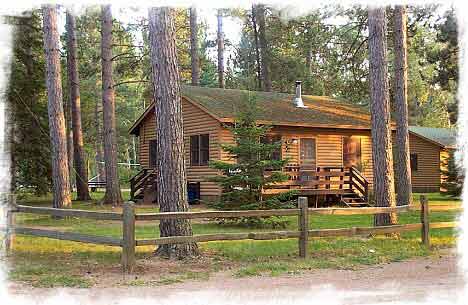
…and it would be just a short walk to the dock, the Adirondack chairs, and of course a daily swim in a lake like this…

…and just down the road from our little lake would be this lighthouse on a much bigger Lake…

…and in the evenings we could look out on our little lake and see this…

…and when taking our morning walks on the road near our cabin in the woods, we might meet up with this…

…and as autumn began to fade we would look out of our bedroom window and see this…

…and we would know that all too soon our driveway would look like this…

…and the groan-inducing sight on a January morning would without a doubt be this…
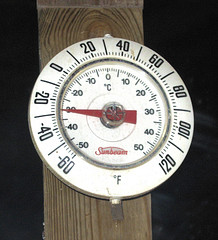
…and a glance at the night sky almost any time of year could reveal this…

Oh, but wait…all this would mean that we would live in northern Minnesota…
…but that’s only if I had my druthers…
Edition 16-Wednesday’s Word
August 26, 2009 | My Jottings
Oh, Mothers of young children, I bow before you in reverence. Your work is most holy. You are fashioning the destinies of immortal souls. The powers folded up in the little ones that you hushed to sleep in your bosoms last night, are powers that shall exist forever. You are preparing them for their immortal destiny and influence. Be faithful. Take up your sacred burden reverently. Be sure that your life is sweet and clean.
J.R. Miller
G-O-D and D-O-G
August 25, 2009 | My Jottings
Our family used to listen to music by Wendy and Mary in the 80s and early 90s, and I still pull out an old CD on occasion to enjoy.
Wendy has a popular song out on youtube right now, and she has put it to her own simple animation. This sweet and simple song made me smile and think.
I hope it brings a smile for you too.
Blessings,
Won’t you be my neighbor?
August 21, 2009 | My Jottings
It’s sort of a joke in our family about what bad dog owners we are. We love our two Schnauzers Edith and Mildred more than they deserve, and they’re a bit spoiled, but they are not well-trained, and we have no one to blame but ourselves.
Schnauzers are rodent-hunters by instinct. In Germany, their land of origin, people kept them as “ratters,” just as some people who live on farms in my area keep barn cats today – for mouse control. Schnauzers are alert and curious, friendly and loyal, and so hyper-vigilant that they never seem to stop barking. Good owners take their Schnauzers to twelve weeks of dog training classes to teach their pooches how to walk nicely on a leash, how to stop barking with one dark look from the owner, and how to do a variety of commands, like sit!, stay!, down!, and don’t even look at me right now because I’m sick of your incessant barking!
But as The Dog Whisperer so regularly reminds us, we are really not good dog owners. Our Schnauzers would stay perched at our den window all their waking hours, if allowed, to be ready to bark at the slightest movement from down the street. If a person jogs by, if the mail-woman parks her truck six doors down, if a squirrel darts by, we are alerted to it no matter where we might be in the house. Edith and Millie have shrieking barks that hurt the ears and make the adrenaline flow.
Anyway, on to the rabbits. Our city is overrun by rabbits. In the past few years there have even been newspaper articles about our burgeoning rabbit population, and we’ve certainly had more than our share of bunnies in the yard. I wrote about our bunny experiences here. Rabbits are large rodents, and Edith and Millie are instinctive bunny haters, so any rabbit who crosses our property line will be chased within an inch of its life.
We have an electric fence, so our dogs remarkably never, ever go beyond the boundaries of our fairly large yard. We’re pretty certain that all the rabbits in our neighborhood have learned that those two yipping and hysterical gray dogs with the mustaches can’t come past this pine and that apple tree, because the rabbits have taken to sitting calmly just beyond the dogs’ reach, and tormenting them. “NYAH-na-na-BOO-boo!” we think they’re saying to Edith and Millie. And it’s driving the Schnauzers crazy.
And maybe our neighbors aren’t enjoying it very much either. So when we hear The Rabbit Shriek Duet, we run to the backdoor and say authoritatively and ineffectively, “GET in here! STOP that barking right now! KNOCK it off you two!” and they come slinking in, but they are never rehabilitated. They never stop it, and we’re not sure they can, because they are Schnauzers and this is what Schnauzers do. At least that’s the excuse I’m holding to so I don’t have to add “Take Edith and Millie to Twelve Weeks of Dog Training” to my already piled up to-do list plate.
Here’s a photo of Millie, stopped just at the electric border in our back yard near the house, shrieking her diligent best, at a calm rabbit several feet away who’s doing the nyah-na-na-boo-boo thing right back at her. You can see Sara and Michael in our hammock, turning to see what all the commotion is about.
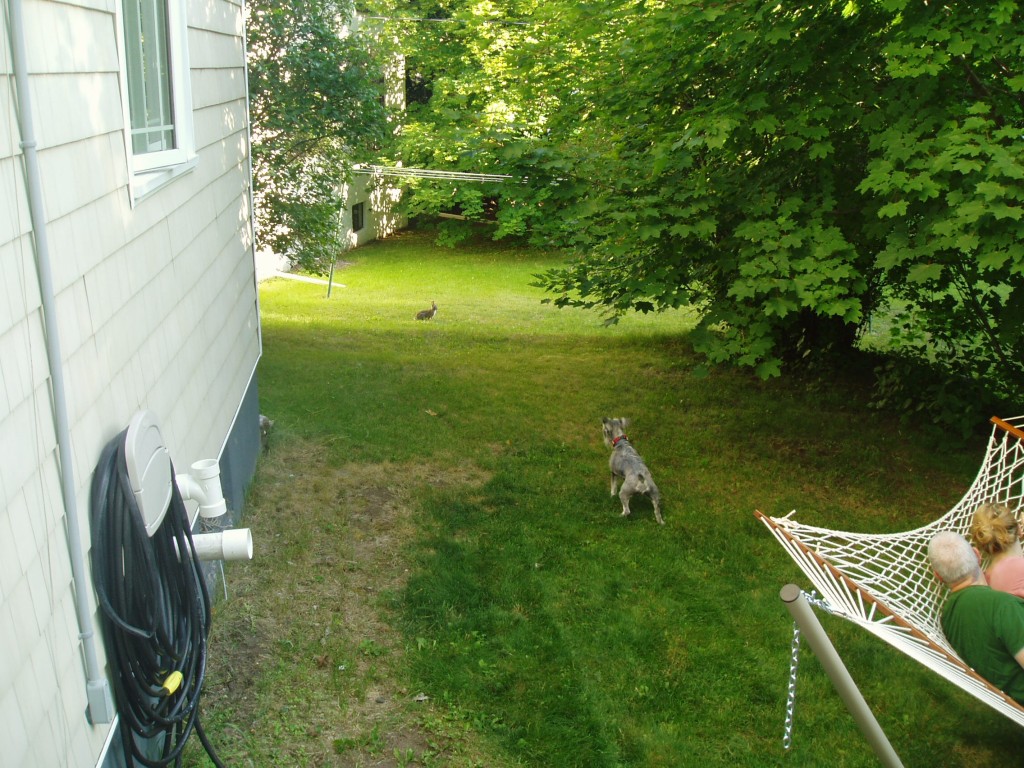
I want to be a courteous neighbor so whenever I hear The Schnauzer Shriek I’m quick to bring them in and give them long lectures about being better citizens. They seem to understand what I’m saying at the time, but then the next time I let them out it’s all forgotten when they spot a chipmunk or a fawn or another dog two back yards away.
I haven’t decided yet if successfully getting Edith and Millie to instantly stop barking at a simple command is possible or not. It seems like it would go against every cell in their stout little German bodies. I know that the road to better dog behavior starts with the owners. But the thought of taking them to classes every week and then spending time daily practicing with them makes me want to take a nap. I don’t know where I could fit it in.
I guess I won’t think about that today. I’ll think about that tomorrow. Or the next day. Or maybe the next.
There’s always the chance that a rodent-only virus will mutate and arrive in Minnesota next week, killing off the entire population of critters that torment our dooginses.
That would certainly save me a lot of trouble. And our neighbors’ ears. Would someone please get on this?
Cardboard Testimonies
August 17, 2009 | My Jottings
Not long ago at a local church in our city, many people participated in something during the morning worship service called Cardboard Testimonies. I didn’t see it, but heard from friends who did that it was very moving, even though the participants didn’t utter a word.
On Sunday, September 6th, our church will be presenting Cardboard Testimonies. My husband, daughter and I will all hold cards as a witness to what God has done (and is doing) in our lives.
I found a few videos online of other churches who have done something similar, and this one I’m posting is my favorite. Michael and I have watched it again and again, and cried each time. I hope you will watch it and share it with someone who needs to see that God can put broken lives back together. The end of the video is amazing.
I could hold up at least half a dozen cardboard signs of my own. I’m so thankful that God can take any broken person or broken situation, and rebuild the ruins of their lives. He has done it for me, yes, and is still doing it.
He can do it for you. Be encouraged. There is nothing God cannot do.
Of Teeth and Temerity
August 15, 2009 | My Jottings
On a frigid fall night in 1984, I was playing tag in the house with my three young daughters. Daddy was on his way home from a fishing trip. Sharon was seven, Carolyn was five, and Sara was two and a half years old. Soon I sat on the couch to rest and watch them chase each other and giggle. Within seconds our fun turned to near-tragedy when my youngest daughter Sara slipped on the carpet as she rounded a corner, and came crashing down on the edge of the coffee table with nothing to cushion the blow but her front teeth. Blood poured from her mouth and she screamed for me. I quickly looked in her mouth and her four upper front teeth were gone. In just a few seconds her upper lip began to swell.
I clawed the carpet in hopes of finding the teeth, but to no avail. I grabbed a kitchen towel with ice to apply to her mouth, directed my other two daughters to keep the doors locked and to tell Daddy what had happened, and then I rushed out into the cold Minnesota night to drive Sara to the emergency room a few blocks away.
Inside the hospital Sara was calmer and the bleeding had stopped, but I was heartbroken over her missing teeth. I thought, she is only two! Will other children make fun of her as she grows up without her front teeth? I mentally kicked myself for allowing the girls to run in the house.
After checking in and giving our insurance information, I was told that all the doctors were occupied, so we were encouraged to go to the waiting area where several people were seated. It was a busy night in the ER. I stood against a wall and held Sara on one hip, and she laid her head on my shoulder while we waited.
By then I was composed enough to finally notice what surely everyone else had observed by now. In my panic and haste to locate Sara’s missing teeth and transport her quickly to the hospital, I never thought about my own appearance. Now, in the emergency room of our local hospital, I looked down at myself and blanched.
Not only was I barefoot and without a coat on a very chilly night, but I was dressed in an old, thin, torn nightgown, with nothing on underneath. Being of the buxom variety of female, I realized with a sick feeling in the pit of my stomach that anyone who had seen me that night had caught an eyeful. I had run out of my house carrying Sara to the car, parked down the street from the ER, and run to the entrance. I had spoken to two receptionists and now I was standing inappropriately dressed in front of several strangers, not to mention that I would soon have to see a physician about my daughter’s missing teeth.
I made a lightning-fast decision right then in the ER waiting area. My daughter was most important. Her health came before my vanity. I would lift my chin, focus on why we were there, and pretend that I was fully dressed. I would not even apologize to the doctor for the way I was (or was not) attired. I would be the Empress in her new clothes and I would not concern myself with what the peasants were thinking.
Thankfully, Sara’s suffering was short and her little teeth were not gone forever. They had been shoved up into her gums, but in time all four of them re-emerged, strong and undamaged.

Today she is a lovely 27-year old with perfectly straight teeth and a captivating smile…
…and the bottom drawer of my dresser is crammed with ankle-length, thick flannel nightgowns. 🙂
Slaying the Dragon of Selfishness
August 14, 2009 | My Jottings
A little over four years ago my dear husband Michael was diagnosed with Parkinson’s Disease. He was only 56 years old, and we certainly did not see that one coming. Our family doctor thought he saw a slight stiffness in Michael’s walk and a lack of facial expression, and referred him to a neurologist. Of course we were stunned when the Stage 2 diagnosis came, and we wondered how this would change his life, and our life together as a couple. Indeed, it has changed almost everything in our married life.
Michael doesn’t have tremors like the majority of Parkinson’s patients, but he has the other classic symptoms: severe joint stiffness, tiny handwriting, an occasional shuffling gait, a blank look on his face, debilitating exhaustion, and a loss of volume in his voice. Everything he does and says is slow and deliberate, and he looks like a man living tentatively.
One of the most difficult things for me personally has been the loss of conversation between us. He can barely raise his voice above a whisper sometimes, and then only for three or four words. I spend a lot of time saying, “What? Pardon? Can you try to say it louder?”, and he gets as frustrated as I do. There’s a lot of silence now. But we have a wonderful love between us. Our marriage has been a gift from God, and even though our aging years are apparently not going to be filled with the familiar, companionable verbal sharing I had pictured, we have touch, we have the knowing way we connect with our eyes, we have humor, we have our 28-year history, and we have Jesus.
Witchinson’s
One day as we were driving home from a neurologist’s assessment in Minneapolis, we were both reflecting on all we had learned. The speech therapist who worked with Michael showed him on a computer monitor how his voice wasn’t even coming close in decibel level to that of a typical speaking voice. She kindly but firmly said to him, “It’s your responsibility to raise your voice so that people can understand you.” So as I drove along on the interstate with traffic noise around us, I was having trouble hearing what Michael was saying. I had to keep my eyes on the road and couldn’t easily study his mouth as he spoke, and I kept saying, “What? Louder.” and finally I raised my voice and said, “The speech therapist just told you that you’re the one who has to make yourself heard! Talk louder!” I was crabby. He said, “Never mind,” which of course made me feel terrible. I apologized to him for being so witchy and intense. And then this is what I said, and we’ve used this terminology and laughed about it ever since: “Michael, you have Parkinson’s, and I have Witchinson’s.”
I couldn’t find the definition of the word Witchinson’s in Webster’s dictionary, but it’s listed in my own personal dictionary, and here’s what it says:
Witchinson’s– wi’ chun suns – noun – (orig. unkn.) 1a – a condition that causes impatience: restlessness or shortness of temper, especially under irritation, delay, or opposition. 2a – being concerned excessively with oneself: seeking or concentrating on one’s own advantage, pleasure, or well-being, with less regard for others.
Now that we’ve established the official definition of Witchinson’s, here’s the official portrait of what it looks like:

But God’s Word has a remedy for every malady – even Witchinson’s, because His Book is like no other.
For the word of God is living and active. Sharper than any double-edged sword, it penetrates even to dividing soul and spirit, joints and marrow; it judges the thoughts and attitudes of the heart. Hebrews 4:12
It’s the only book we’ll ever hold in our hands that’s living and active, and powerful enough for any mountain in our lives. Next time you have your Bible nearby, just take a long look at it. It may look much like any other book, but I believe if we could see it through God’s eyes, we would see the pages brilliantly lit and shimmering with power, and we could feel it vibrate with the very life of God. But He has told us to live by faith and not by sight, and we are to take Him at His Word, even when we don’t yet see all that He’s going to do. So my Bible does not shimmer and pulse, but if we could see it with spiritual eyes I believe we would hungrily pick it up and read many times a day.
So while my kind and humble husband is losing mobility and needs help with his shoelaces and with cutting food, I have gone through an inner battle with some disappointment. This last year has been full of unwelcome changes around every corner. As Michael’s abilities have lessened, it seems that my life has gotten smaller. I’ve had to let go of some activities that felt like they were life-giving to me, in order to keep up with the increasing demands of our work, and of my husband’s needs. And even if I don’t always show it on the outside, Witchinson’s rears its ugly head too often on the inside. With every impatient sigh or roll of my eyes, or wave of self pity that comes, I know that God can see my heart, and wants me to be different. More like Him. It isn’t that my heart doesn’t break for what my formerly active and strong husband is suffering. It’s just that in my own weariness, sometimes I’ve allowed self-pity and selfishness to govern my thoughts instead of the Word of God. And unfortunately, there have been times when I’ve been more businesslike with Michael than servant-hearted. There’s a lot to accomplish on any given day, and I can be brusque and task-oriented rather than gentle and people-focused. I’ll bet some of you reading this relate to what I’m sharing, even if your husband isn’t sick. Some of you are overwhelmed with your own struggles – challenging children, inattentive spouses, financial hardship, precarious health issues, loneliness, secret battles, or just plain tiredness. You know the feeling of starting each new day with firm resolve, and ending it with the confession of your failures.
Because I long to walk closely with the Lord and bring a smile to His face, I’m always crying out to Him about this issue, asking for His help and strength. I know He’s able to bring to completion the good work He has started in me, but I’m dismayed at how quickly my selfish nature surfaces. I can’t give an exact formula of how to slay the dragon of selfishness in our lives, but I can share how God is consistently moving in my heart and hope that someone will be encouraged.
Epiphany
A couple of months ago, as a group of us were driving to the Twin Cities to attend the CBS Leadership Conference, my dear and wise friend Sue R. and I were talking in the front seat. She shared with me about her father and the inevitable changes that aging has brought to his life, how he doesn’t talk as much as he used to, or have as much energy. She quoted something she had read that made her think of her dad, and it was something like this: “Just his presence was enough now. He had passed on his strength and character to the next generation.” Just his presence was enough.
And with those words, I sensed the Lord begin to speak to my heart about Michael. Just his presence is enough. And it was as if a few scales fell from my darkened eyes. For months I’d been thinking, “Is this how my life is going to turn out? No meaningful conversation? No more adventurous travel? Just me taking care of the multitudes and no one taking care of me?” Oh, that dragon creeps in and turns our thoughts to ourselves and what we think we deserve, and how sorry our lives are, doesn’t he? That real dragon, the enemy of our souls, is always lying in wait, always crouching at the door, sniffing for an opportunity to assist us in getting our eyes off of Jesus and onto ourselves.
Then, the whole theme of the conference we attended was about being a servant leader, and how our lives are truly found when we give them up for His sake and for His purposes. One of the scripture passages mentioned repeatedly by the different speakers was Philippians 2:3-8:
Do nothing out of selfish ambition or vain conceit, but in humility consider others better than yourselves. Each of you should look not only to your own interests, but also to the interests of others. Your attitude should be the same as that of Christ Jesus: Who, being in very nature God, did not consider equality with God something to be grasped, but made Himself nothing, taking the very nature of a servant, being made in human likeness. And being found in appearance as a man, He humbled Himself and became obedient to death, even death on a cross!
This is absolutely impossible to do without God. It’s absolutely impossible to even want to do without God. But with God, all things are possible. As I pondered my struggles of the last year, I could see that most of them were rooted in pride and selfishness.
I’ve read these verses from Philippians countless times. But at the CBS retreat God quickened them to me and I knew He was asking me to take them to heart, and begin to serve my husband differently. He was asking this because He so dearly loves Michael, and He so dearly loves me. He only asks of us what will be best for us.
Michael’s presence is enough. His presence is a blessing, a gift to me from my heavenly Father. And as I sat there and drank in what the Lord was pressing on my heart, I knew that with God’s supernatural equipping, I could go home and begin to make my husband’s life heaven on earth.
Now I know there’s a limit to that. This earthly life isn’t heaven and it’s not meant to be mistaken for it – and Michael is accountable for his own choices. I can’t take away his Parkinson’s, but I can let him know every day that I consider his very presence enough, extravagant, even. He may not have many words for me anymore, but that doesn’t have to affect how I love and serve him. As I have asked God to give me creative ways to bless Michael in this new season of our marriage, He has been faithful to do it. We all need new and creative ways to walk out the lives we’ve been given. We can ask God. We can go to Him, humble ourselves, tell Him we’re willing to obey, and He will show us what to do.
Real Life
I couldn’t wait to get home from the conference to put into practice what I felt that the Lord had spoken to me. But I sort of didn’t want to tell Michael too much about it, because I knew I’d eventually fail. And I have failed. Miserably. Again and again. For me, slaying the dragon of selfishness is sometimes a minute-by-minute kind of effort. And many times the arrows I shoot fall to earth without even getting close to the target.
To keep it real, I’ll share a recent failure at making our home heaven on earth for my husband. He’s having a hard time turning over in bed these days, and not long ago I woke up as he was struggling to do just that. Edith the Schnauzer was curled up behind his knees, the covers were twisted around his legs, and I could hear him trying to do what you and I take for granted: turn over in bed and cover ourselves. So I sat up, moved chunky Edith away from him, gently positioned Michael on his side, and pulled first the sheet, then the blanket, then the warm comforter up over him so he would be nice and warm. I didn’t know he was half asleep. As I was making sure the covers were right up under his chin he mumbled (petulantly), “Stop it.” And I aimed some daggers from my eyes at him there in the dark and promptly said, “Fine. Do it yourself then.” So much for heaven on earth.
The next morning I apologized right away for my attitude, but he didn’t remember a thing. When I told him what had happened he laughed, and I was thankful for a new day, with new mercies, and a powerful and patient God who enables His weak and needy people to do the impossible by living on His love and strength.
But I’m finding that just making up my mind to do this isn’t what helps me do it. It’s going to God. It’s sitting with Him, searching His Word, and asking Him how He wants to bless Michael through me that day. I have failed way more often than I have succeeded, but on good days I cry out to my Savior in utter helplessness and trust that He will give light as the day progresses.
A couple of years ago I was standing at the kitchen sink as Michael was saying something to me, and as usual I had a hard time understanding him. After asking him to repeat himself numerous times, he finally spoke loudly enough to be heard. Irritated, I said, “Why don’t you speak that loud the first time? It can’t take more energy than repeating yourself five times!” Michael calmly looked into my eyes and said quietly, “Julie, the Lord is using me to refine you.” And as he walked away I stood at the sink and the tears fell, because I knew he spoke the truth.
I’m still disappointed that our lives aren’t turning out as we had dreamed. We had talked of traveling during our retirement years, of a cabin on a lake, of missions trips, and more. Sometimes the days seem horribly dark to me, with our choices getting more limited and our future so uncertain.
But I would rather have God in the dark, than to be in the dark without God. One day in His presence is better than a thousand elsewhere.
Gratitude as a Weapon
I have not slain the dragon of selfishness once and for all. It seems that it’s something I need to do again and again. Just this morning as I was waking up in the chill and dark of our bedroom, I thought I saw the thin, sulfurous streams of breath exhale upward from two ghastly nostrils. That dragon is waiting for me to whine and complain and sigh and despair each morning even before the sun comes up. But I have the quick and sure arrows of God’s truth in my quiver, if I will use them.
I can either be led stupidly into the dank and hideous lair of the dragon of selfishness, or I can stay and dwell in a spacious place, a light and wide open space of freedom and joy. (He brought me out into a spacious place; He rescued me because he delighted in me. — Psalm 18:19)
Today I choose the spacious place. I choose the life God has given me. I don’t have to fully understand His ways to trust Him. Today I plant my feet, reach back over my shoulder and take from my quiver the golden arrow called Thankful. I carefully place the arrow into position on the bowstring, close one eye to aim, draw it back in perfect form, pause, and let it zing, flying straight, far and true…into the heart of the dragon of selfishness.
Today this is what I will do.
The Key to Something
August 12, 2009 | My Jottings
I just read a book I loved called Blue Like Jazz, by Donald Miller. It’s a series of topical essays by a very funny, candid Christian man whose political beliefs are not my own, but that doesn’t matter to me. I laughed out loud and cried a lot while reading this book, and one section moved me so profoundly I knew I wanted to share about it.
I was going to actually quote one paragraph from the book, and naturally give credit to Donald Miller, but when I emailed Thomas Nelson Publishers just to make sure I was doing it right, they promptly wrote back and said I couldn’t quote the paragraph at all. Even though it would have been a glowing blog post, I can’t quote it word for word. So that means I have to convey what the paragraph in the book said, using my own words to retell it, and, loquacious person that I am, it might not be as concise. But it’s worth the telling, I think.

Apparently a friend of Donald Miller’s, a man named Alan, decided to go around the country and interview the heads of big ministries, to find out why they were doing what they were doing, and what made their ministries so successful. This didn’t sound very interesting to the author of Blue Like Jazz until his friend started talking about the part where he sat down with Dr. Bill Bright, former head of Campus Crusade for Christ. Alan said that Dr. Bright met with him to answer questions, and always looked him in the eye when he responded. At the end of the interview, Alan concluded by asking him, “What does Jesus mean to you?” And he said that this large, powerful man who sat behind a large desk as the founding president of a huge and effective ministry, couldn’t answer at first. Dr. Bright’s eyes filled up with tears and he began to cry.
Donald Miller was deeply moved that someone would love Jesus so much, that just to hear the mention of His name would make him weep. He wondered if Dr. Bright was either a fruit nut or someone who knew Jesus so well that it was all he could do to keep it together when he thought of what Christ meant to him.
Donald Miller wrote that he would like to love Jesus like that too. He mused that knowing Jesus so intimately and loving Him so utterly might just be the key to something.
I can’t get this out of my mind.